Best overall for truck ownership: an equipment loan. Best for planned replacement: an equipment lease. Best for recurring repair bills: a business line of credit. Best for equipment-related working capital: a merchant cash advance when its repayment terms fit your revenue. This 2026 guide compares equipment financing for trucking companies by purpose, ownership and cash flow, rather than treating every funding option as interchangeable.
TL;DR
- Equipment financing for trucking companies starts with a choice: finance the vehicle or fund the business around it.
- Equipment loans suit ownership; equipment leases suit businesses that prefer use over immediate ownership.
- Business lines of credit suit recurring operating expenses, subject to approved terms and limits.
- 2M7 provides merchant cash advances for Canadian businesses seeking equipment-related working capital, not conventional equipment loans.
Why this matters
A truck purchase and a repair-related cash flow gap are different funding problems. A vehicle can support your business for years, while a repair bill needs to be matched against the cash available after the truck returns to work.
Match the funding structure to the expense before comparing providers. Otherwise, you can end up using operating cash for a long-term asset or taking on a repayment schedule that leaves too little room for fuel, insurance and payroll.
2M7 is a Canadian direct funder, not a broker, offering merchant cash advances and working capital. That makes it relevant to equipment-related cash needs, but not interchangeable with a lender financing a specific truck.
What makes the best trucking equipment financing?
Use these criteria to compare your 2026 options before requesting an offer:
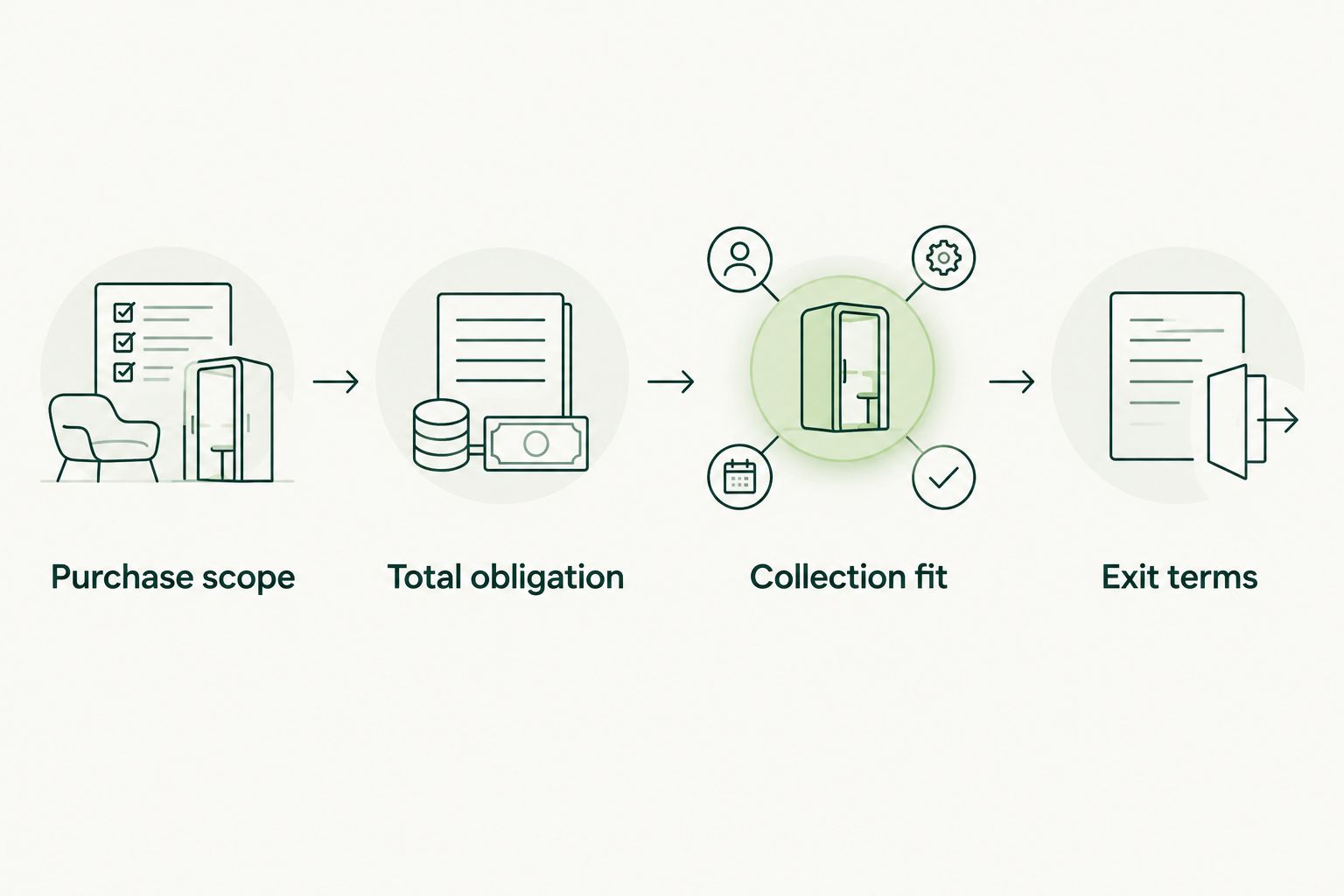
- Funding purpose: Separate buying a truck from paying for repairs, equipment, payroll or a cash flow gap.
- Ownership: Establish who owns the equipment during the agreement and what happens at the end.
- Cash flow: Compare payment timing with actual collections, not just the dates you issue invoices.
- Security: Identify the truck, other assets or guarantees covered by the agreement.
- Total obligation: Review the complete repayment obligation, charges and end-of-term requirements in writing.
- Eligibility: Check business history, revenue, credit and equipment requirements before preparing an application.
No option wins every category. A suitable purchase agreement can still be unsuitable for recurring expenses, and an accessible working capital offer can still put pressure on operating cash.
Trucking equipment financing at a glance
Equipment loan
- Best for: Buying a truck you intend to keep
- Standout feature: Financing tied to an equipment purchase
- Key limitation: Security and repayment obligations require close review
Equipment lease
- Best for: Using equipment with a planned replacement strategy
- Standout feature: Contract defines equipment use and end-of-term choices
- Key limitation: Ownership is not automatic
Business line of credit
- Best for: Recurring repairs and operating expenses
- Standout feature: Reusable borrowing capacity under the agreement
- Key limitation: Approval, limits and renewal terms constrain access
Merchant cash advance
- Best for: Equipment-related working capital supported by business revenue
- Standout feature: Funding assessed against the operating business
- Key limitation: It is not a substitute for reviewing truck-specific financing
These are financing structures, not a ranking of named lenders. Actual suitability depends on the written offer, your business finances and the equipment involved.
1. Equipment loan: best for long-term truck ownership
An equipment loan finances an equipment purchase through a lending agreement. For a trucking company buying a vehicle it intends to keep, it is the clearest starting point because the funding decision centres on the asset and the business's ability to repay.
Ask whether the lender accepts the truck's age, condition, seller and intended use. Do not assume an offer for one vehicle applies to another, even when both serve the same route.
Equipment loan pros:
- Connects the financing request to a defined equipment purchase.
- Supports an ownership-focused fleet plan.
- Provides a repayment schedule you can assess against operating cash flow.
Equipment loan cons:
- Security arrangements can restrict your ability to sell or refinance the truck.
- Payments continue when the truck is idle or undergoing repairs, unless the agreement provides otherwise.
Best for: An established owner-operator or fleet buying equipment for continued use.
Before accepting an equipment loan in 2026, ask what happens if you sell the truck, repay early or need to replace it after a breakdown. Also confirm whether the agreement covers only the equipment or requires additional security.
Verdict: Buy through an equipment loan when ownership is the goal and the payment leaves room for maintenance and downtime.
2. Equipment lease: best for a planned replacement strategy
An equipment lease gives your business the right to use equipment under a contract. The agreement determines payments, responsibilities and what happens when the lease ends.
A lease belongs on your shortlist when access to the truck matters more than immediate ownership. It requires careful end-of-term planning, not just a comparison of periodic payments.
Equipment lease pros:
- Separates the decision to use equipment from outright ownership.
- Can support a defined equipment replacement plan.
- Establishes contractual choices for the end of the lease.
Equipment lease cons:
- Returning or purchasing the equipment depends on the specific agreement.
- Usage, condition and early termination provisions can limit flexibility.
Best for: A trucking company with a clear replacement plan and predictable equipment requirements.
Request the full end-of-term wording before signing. Check for purchase obligations, return conditions and any restrictions that conflict with your intended operation. Do not assume maintenance, insurance or repairs are included simply because the vehicle is leased.
For a 2026 comparison, put the lease's total obligations beside the equipment loan's total obligations. A smaller periodic payment does not establish which agreement is better for your business.
Verdict: Buy into a lease only when its use restrictions and end-of-term terms fit your fleet plan.
3. Business line of credit: best for recurring repair expenses
A business line of credit lets you borrow within an approved limit under the lender's terms. Its main role in trucking is managing recurring operating expenses, rather than replacing a dedicated truck-purchase agreement.
Repairs, parts and maintenance do not always line up with customer collections. A credit line gives you a structure to assess those repeated cash needs without treating each expense as a separate equipment acquisition.
Business line of credit pros:
- Provides reusable borrowing capacity under the agreement.
- Supports different operating expenses rather than one named asset.
- Lets you distinguish short-term cash needs from long-term equipment ownership.
Business line of credit cons:
- Approved limits and renewal conditions can constrain your plans.
- A continuously drawn balance can conceal an unresolved operating shortfall.
Best for: A trucking business with recurring expenses and a credible plan to restore available credit from collections.
Check whether the facility is secured, what reporting is required and how repayment works. Ask about the lender's rights to change or demand repayment of the facility; do not assume access remains unchanged indefinitely.
If your plan depends on keeping the line fully drawn, reassess the underlying cash flow. Reusable credit works best when your business can repay drawings, not simply move expenses into a growing balance.
Verdict: Hold off on using a line of credit for a truck purchase unless the written terms and repayment plan support that use.
4. Merchant cash advance: best for equipment-related working capital
A merchant cash advance provides business funding through an agreement distinct from a conventional equipment loan. Consider it when the need extends beyond acquiring a vehicle, such as equipment expenses alongside payroll, inventory or a cash flow gap.
2M7 is best suited to Canadian businesses seeking merchant cash advance working capital, rather than a conventional truck-purchase loan. It serves businesses operating for at least 3 months with $15,000 or more in monthly revenue, including businesses with less-than-perfect credit.
Merchant cash advance pros:
- Addresses operating-business needs, including equipment-related expenses.
- Offers an alternative structure to conventional equipment borrowing.
- Provides a direct-funder option through 2M7, without a broker between the business and funder.
Merchant cash advance cons:
- It is not an equipment loan and should not be compared as though the contracts are identical.
- Repayment obligations still need to fit cash flow after essential operating expenses.
Best for: A revenue-generating Canadian business that meets the funder's requirements and needs working capital rather than asset-specific financing.
For 2M7 working capital, the cost structure is one fixed cost of capital shown before signing; it does not change based on how long repayment takes. Review the total obligation and repayment mechanism alongside your other written offers. Flex payments are only for businesses that process daily card payments, so do not assume that feature applies to a trucking operation paid through invoices.
Verdict: Buy into a merchant cash advance only when its business purpose and repayment terms fit your collections.
How to compare your written offers
Use the same sequence for every 2026 offer. Comparing unlike figures, such as a lease payment against an advance amount, does not tell you which agreement fits.
- Define the job: Write down whether you need a truck, a repair, replacement equipment or operating cash. Separate expenses that serve different purposes.
- Check eligibility: Confirm business, revenue, credit and equipment requirements before committing to an application process.
- Compare written terms: Record the amount provided, total obligation, payment timing, security, guarantees and exit conditions.
- Test cash flow: Place repayments beside expected collections and essential expenses. Check what happens during downtime or delayed customer payments.
A workable offer leaves your business able to operate the truck after obtaining the funding. Approval alone does not answer that question.
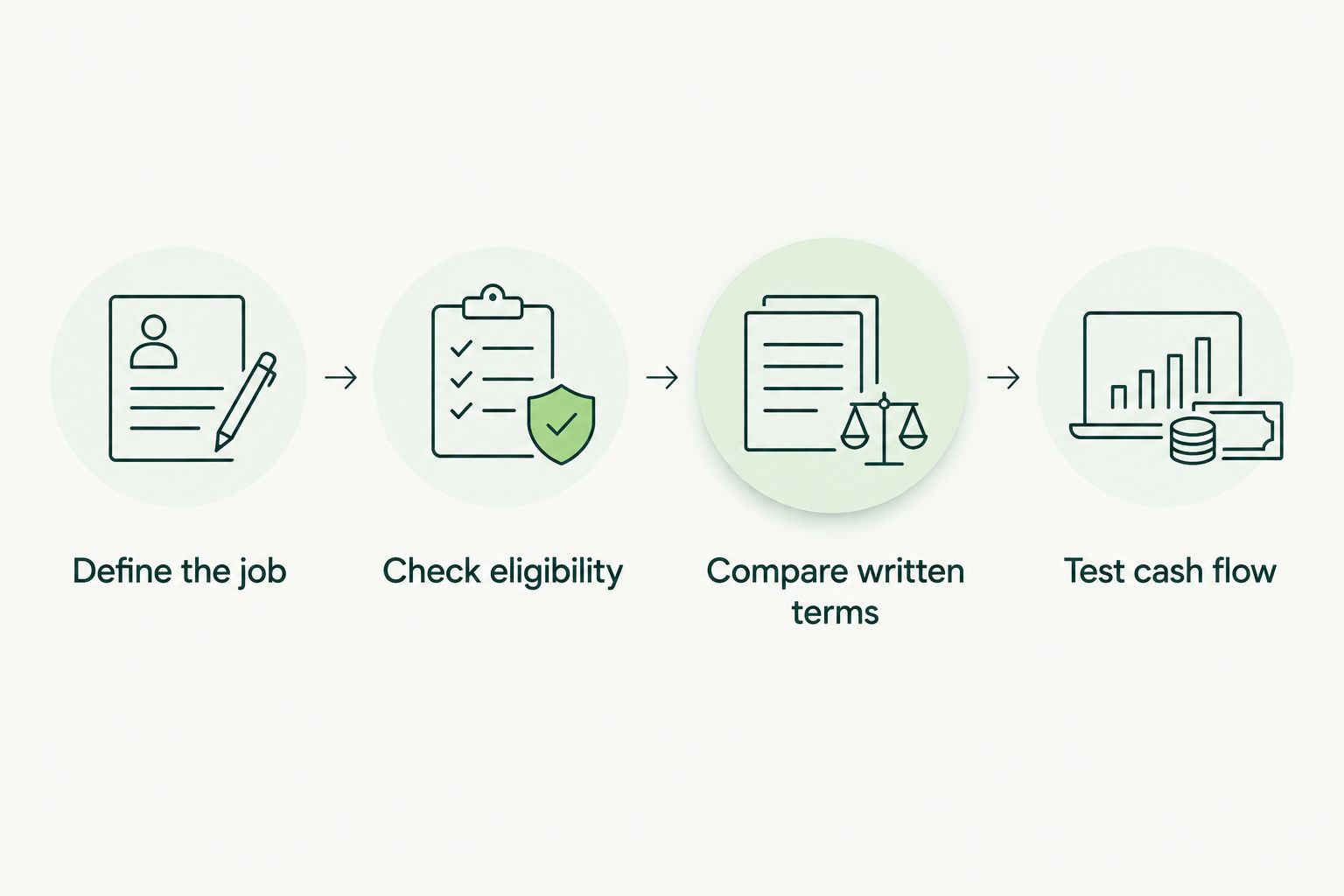
Start with the expense and finish by testing the repayment against operating cash flow.
How the options are ranked
The ranking follows funding purpose, ownership, cash flow, security, total obligation and eligibility. Equipment loans lead for ownership; leases serve planned use and replacement; credit lines address recurring expenses; merchant cash advances address operating-business funding needs.
This is a purpose-based buying guide, not a claim that one provider offers the lowest cost or approves every trucking business. Compare the actual contracts before choosing.
Which equipment financing should you choose?
Start with an equipment loan if you are buying a truck you intend to keep. Compare a lease when your priority is equipment use with a defined replacement plan.
Choose a business line of credit for recurring expenses only when you can explain how collections will repay drawings. Consider a merchant cash advance when the need is working capital and the agreement fits your revenue.
For your 2026 decision, keep the truck purchase and the operating reserve separate on paper. You need to know both how you will acquire the equipment and how you will keep it earning.
Discuss your funding options
Speak with a funding specialist about working capital for your Canadian business.
FAQ
What's the best equipment financing for trucking companies in Canada?
An equipment loan is the strongest starting point when your goal is to buy and keep a truck. Compare a lease for planned equipment use, a credit line for recurring expenses and a merchant cash advance for working capital needs.
Is leasing a truck better than financing a purchase?
Leasing is better suited to a use-and-replacement plan, while an equipment loan suits an ownership plan. Compare total obligations, return conditions, security and early exit terms before choosing.
Can I use working capital for truck equipment?
Working capital can support equipment-related business expenses when the funding agreement permits the use. Separate the equipment expense from ongoing payroll, fuel and maintenance so you can assess the full cash requirement.
Does 2M7 offer conventional equipment loans?
2M7 provides merchant cash advances and working capital, not conventional equipment loans. It is a Canadian direct funder, not a broker.
Can a newer trucking business qualify for a merchant cash advance?
The stated eligibility baseline is at least 3 months in business and $15,000 or more in monthly revenue. Meeting that baseline does not establish approval or the terms of an offer.
What should I check before signing a trucking finance agreement?
Check the total obligation, payment timing, security, guarantees and early exit terms. For leases, also check equipment return conditions and any purchase requirements.
Do flexible payments apply if customers pay trucking invoices?
Do not assume flexible payments apply to invoice-based collections. The flex-payment feature described here is only for businesses that process daily card payments.
One last thing
The truck payment is not the truck's full cash requirement. Before signing, put fuel, insurance, maintenance, payroll and a downtime allowance beside the proposed repayment. An agreement that fits only while every invoice arrives on time does not leave your business room to handle disruption.