ClickCease

Restaurant Equipment Financing in Canada: Your Options, What Providers Look At, and What Each Costs

Restaurant Equipment Financing in Canada: Your Options, What Providers Look At, and What Each Costs

6
Oct 2026
6
Oct 2026

Restaurant equipment financing lets a restaurant pay for ovens, refrigeration, hoods, dishwashers and POS systems over time instead of in one payment. Canadian restaurants have six main routes: leasing, vendor financing, bank or specialist equipment financing, BDC, the Canada Small Business Financing Program, and a merchant cash advance.

The right one depends on four things: how long the restaurant has been operating, its credit history, how quickly the equipment is needed, and whether the equipment is new or used. A planned kitchen upgrade gives you time to compare offers. An emergency replacement does not.

Restaurant margins leave little room for the wrong choice. Statistics Canada reports that food services and drinking places earned a 4.1% operating profit margin in 2024. Cost of goods sold took 35.9% of expenses, and salaries, wages and benefits took another 33.6%. A walk-in cooler that fails in July has to be paid for out of what is left.

This guide explains how each option works, what each provider looks at, what each costs, and where each one fits.

Your restaurant equipment financing options compared

These routes overlap. A dealer may arrange its financing through a bank or a specialist, and BDC is itself an equipment financing provider. The table separates the routes you will meet when you shop.

‍

Option How it works Best for Main limitation
Equipment leasing You pay to use the equipment for a set term, often with an option to buy it at the end Equipment you expect to replace or upgrade You do not own the equipment during the term
Vendor or dealer financing The dealer or manufacturer finances the purchase, directly or through a partner Speed and a low upfront cost Shorter terms and less flexibility than a term loan
Bank or specialist equipment financing A bank or financing company funds the purchase and usually secures it against the equipment Established restaurants buying long-life equipment Requires financial statements and forecasts
BDC Equipment Loan Covers up to 125% of the purchase price, repaid over up to 12 years Restaurants with at least 12 months of revenue and a good credit record Not open to restaurants with under 12 months of revenue
Canada Small Business Financing Program A government-backed term loan, applied for through a financial institution Start-ups and existing restaurants that can qualify with a bank or credit union A 2% registration fee, and the institution makes the lending decision
Merchant cash advance An advance on future sales, repaid from revenue Urgent replacements, repairs, or cases where credit rules out other options Typically costs more than bank financing

Need to replace equipment and keep your operating cash intact? See 2M7's restaurant equipment and operations funding, including who qualifies and how payments work.

How much does restaurant equipment financing cost?

There is no single rate for restaurant equipment financing in Canada. Your quote depends on the provider, your restaurant's finances, the equipment, the amount and the length of the agreement.

To compare offers fairly, ask every provider the same six questions about the same purchase:

  1. How much cash do I pay up front, including any deposit or down payment?
  2. What is each payment, and how often is it collected?
  3. What is the total I will pay, including all financing charges and fees?
  4. Is there a final payment or a buyout before I own the equipment?
  5. What happens if I pay the balance early?
  6. Do the payments change if my sales fall?

A longer term lowers each payment and raises the total you pay. A low lease payment can also leave out the buyout you need to take ownership.

Route How the cost is expressed What to compare
Leasing Lease payments, fees and any buyout The full cost to use the equipment, and the full cost to own it if that is your goal
Vendor or dealer financing Interest or other financing charges set by the seller or its partner The financing offer against the dealer's cash price and one other quote
Bank, specialist or BDC financing Interest and fees Total interest, fees, your upfront contribution and the payment schedule
CSBFP term loan Fixed or floating interest, plus a 2% registration fee The rate you are quoted against the program's ceiling
Merchant cash advance A fixed cost of capital, set before you sign The amount you receive, the total you repay, and how often payments are collected

The CSBFP is the one route with a published ceiling. The maximum floating rate is the lender's prime rate plus 3%, and the maximum fixed rate is the lender's single-family residential mortgage rate plus 3%. The registration fee is 2% of the loan. These are limits, and your own quote may be lower.

A merchant cash advance carries no interest rate, but it does carry a cost. Ask for the dollar amount you will receive and the dollar amount you will repay, in writing, before you decide.

Restaurant equipment leasing

Restaurant equipment leasing lets you use equipment for a fixed term in exchange for regular payments, without buying it at the start. Many leases include an option to purchase the equipment when the term ends.

BDC's guidance is that leasing suits equipment with a shorter lifespan or equipment that needs frequent updating, while buying suits equipment that will last. In a restaurant, that points to leasing for POS hardware and other technology, and to buying for ranges, hoods and walk-in coolers that stay in service for years.

Before you sign a lease, ask four questions. Who pays for maintenance? Can you swap the equipment during the term? What does the end-of-term buyout cost? What happens if the restaurant moves or closes?

Leasing also changes how the cost is treated at tax time. The Canada Revenue Agency lets a business deduct the lease payments incurred in the year for property used in the business. If the leased property has a total fair market value above $25,000, you and the lessor can jointly elect to treat the lease as a purchase. You would then deduct the interest portion and claim capital cost allowance on the equipment. Ask your accountant which treatment fits your restaurant.

What a lessor looks at: the equipment itself, the length of the term, and your restaurant's ability to make the payments.

Vendor and dealer financing

Vendor financing means the company selling the equipment also arranges the financing. BDC describes it as financing provided through a manufacturer's financing division or a partner financial institution.

The appeal is convenience. You choose the equipment and arrange payment in the same conversation, and BDC notes that vendor financing is fast and carries lower upfront costs.

The trade-off is flexibility. BDC describes vendor financing as shorter term and less flexible than a traditional term loan. Before you sign, compare the total you will pay against at least one other option on this page.

Ask for the equipment's cash price separately from the financing offer, so you can see what the financing itself costs. Choose the equipment first, on the model, warranty and servicing your kitchen needs. A supplier's financing offer should not decide what you buy.

What a vendor looks at: this varies by dealer and by the financing partner behind it. Ask who the actual financing provider is and what happens if you want to pay the balance early.

Bank and specialist equipment financing

Banks and specialist equipment financing companies fund the purchase of business equipment and assess both the business and the asset. According to BDC, the equipment is used as collateral most of the time, and the repayment period is matched to the equipment's lifespan.

This route suits an established restaurant buying equipment that will last. The paperwork is heavier than with a vendor. BDC lists what equipment financing providers commonly ask for:

  • Financial statements for the past two years
  • A monthly cash flow forecast for the rest of the current year and the following 12 months
  • Background on the company, its operations and its management
  • An explanation of how the equipment will increase sales, profitability or efficiency

Requirements vary with the provider and the size of the request. Ask whether the offer covers delivery and installation. Financing that covers only the equipment can leave a cash gap before the kitchen can use it.

What a bank or specialist looks at: the restaurant's financial history, its forecast, and the resale value of the equipment.

BDC equipment financing

The Business Development Bank of Canada offers an Equipment Loan for new or used equipment. Its terms are among the longest available to a Canadian restaurant:

  • Financing of up to 125% of the purchase price, which leaves room for shipping and installation
  • Repayment over up to 12 years
  • The option to postpone capital payments for up to 24 months at the start

Eligibility is the constraint. BDC requires the business to be based in Canada, to have generated revenue for at least 12 months, and to have a good credit track record.

Postponing capital payments delays the principal. It does not remove the cost of financing, so check what the payment becomes once principal repayment starts.

What BDC looks at: revenue history of 12 months or more, and credit record. A restaurant that opened this year, or one with damaged credit, will need a different route.

Canada Small Business Financing Program

The Canada Small Business Financing Program (CSBFP) is a federal program that shares the risk of a loan with the financial institution that makes it. You apply through a bank or credit union, and that institution alone decides whether to approve the loan. Most start-ups and existing small businesses with gross revenues of $10 million or less can apply.

The program allows a business to borrow up to $1.15 million: a maximum of $1 million in term loans and $150,000 in lines of credit. Term loans can pay for new or used equipment.

The full $1 million is not available for kitchen equipment alone. The program sets a lower limit for equipment and leasehold improvements, so confirm the current figure with your financial institution before you plan a purchase around it.

The program also caps the cost. The maximum floating rate is the lender's prime rate plus 3%, and there is a registration fee of 2% of the loan.

Restaurants use this program more than any other sector. In 2024-25, accommodation and food services received $900.9 million, or 47.8% of the total value of CSBFP loans. Equipment loans made up 18.6% of the total.

What the financial institution looks at: the same things it would for any business loan, including financial statements, forecasts and credit history. The program reduces the institution's risk. It does not remove its approval process, so allow time for it.

Financing used restaurant equipment

Used restaurant equipment can be financed. BDC's Equipment Loan and CSBFP term loans both cover new or used equipment, and other providers set their own rules.

A used range or dishwasher costs less up front, which shrinks the amount you need to finance. It also gives a financing provider less security, because older equipment is worth less if it has to be resold.

Before you pay a deposit on a used purchase, ask each provider four questions:

  1. Is there a limit on the age or condition of the equipment you will finance?
  2. Do you need an appraisal, an inspection report or proof of ownership?
  3. Will you finance a purchase from a private seller or an auction, or only from a dealer?
  4. Are delivery, installation and any repairs included?

Compare the installed cost of the used unit against a new one, including warranty and servicing. A lower price helps less if the unit breaks down soon after it goes in.

If the answers rule out conventional financing, a merchant cash advance is one way to fund a used purchase, because the funding is based on your sales and not on the equipment.

Restaurant equipment financing with bad credit

Bad credit narrows your options without closing all of them. BDC notes that there is no specific credit score needed to get a business loan, and that financing can still be obtained with a suboptimal score when other factors, such as projections and collateral, are strong.

In practice, a weak credit history makes bank-delivered options harder to secure and pushes restaurants toward providers that weigh revenue more heavily. 2M7 bases approval on recent sales activity, and credit score is one factor among several.

For a full comparison of what each provider checks and what each option costs, read Bad Credit Equipment Financing in Canada.

Financing equipment for a new restaurant

A restaurant that has not opened yet, or has just opened, has fewer options because it has no revenue history to show.

Stage What is realistic
Before opening Leasing, vendor financing, or a CSBFP loan through a financial institution
Open less than 3 months The same three options
Open 3 to 12 months The options above, plus a merchant cash advance from 2M7 if monthly revenue is at least $15,000
Open 12 months or more All six options, including the BDC Equipment Loan

Without revenue history, a provider relies on your business plan, your forecast and your personal credit. Have all three ready before you approach a lessor, a vendor or a bank.

When a merchant cash advance makes sense for restaurant equipment, and when it does not

A merchant cash advance is an advance on your restaurant's future sales. You receive a lump sum and repay it from revenue, with the total cost set before you sign. It is not secured against the equipment.

It has no interest rate, but it has a cost: a fixed amount set at the start. Compare that cost against the sales you lose each day the kitchen is down.

It makes sense when:

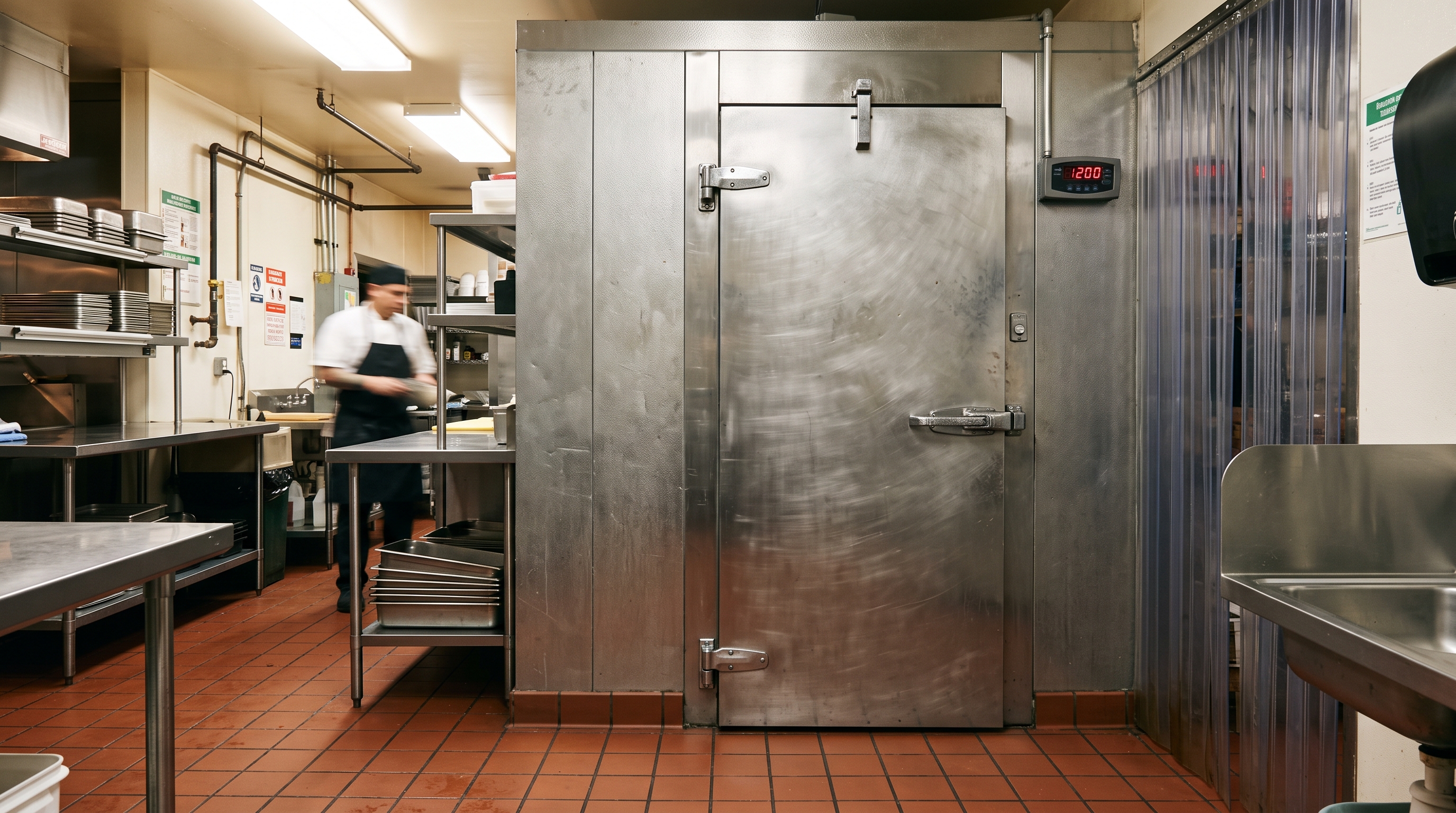
  • The equipment has failed and the kitchen cannot run without it. A dead walk-in cooler or range costs you sales every day it is out, and a bank process measured in weeks does not help.
  • The cost is a repair, an installation or a compliance fix. Conventional equipment financing is built around buying an asset, and these costs do not always qualify.
  • You are buying used equipment from a private seller or an auction that an equipment financing provider will not fund.
  • Your credit history or time in business rules out BDC and bank options, but your sales are steady.

It does not make sense when:

  • The purchase is large, planned and long-lived. If you qualify for a BDC Equipment Loan or a CSBFP loan and can wait for approval, a term of up to 12 years will usually cost less than a merchant cash advance.
  • Sales are too thin to carry the repayments. Funding tied to revenue only works if the revenue is there.
  • The restaurant has been open less than 3 months or brings in under $15,000 a month. It will not qualify with 2M7.

The practical test is whether your restaurant can carry the repayments and still cover food, wages and rent. Run the numbers against a slow month, not your busiest one.

How to prepare before applying

Having the right documents ready shortens every one of these processes. What you need depends on the route.

For leasing, vendor financing, specialist financing, BDC or the CSBFP:

  • A written quote or purchase agreement for the equipment
  • Financial statements for the past two years
  • A monthly cash flow forecast
  • A short explanation of what the equipment will do for the restaurant: more covers, lower energy bills, fewer breakdowns
  • Your premises lease, since a provider may want to know how long you can stay at the location

For a merchant cash advance from 2M7:

  • Three months of business bank statements
  • Photo ID
  • A void cheque

Get two quotes for the equipment before you apply anywhere. A lower purchase price reduces the amount you finance under every option.

Then budget for the whole project: the equipment, delivery, installation and removal of the old unit.

How 2M7 funding works for restaurant equipment

2M7 Financial Solutions is a direct funder that provides merchant cash advances of $5,000 to $300,000 to Canadian businesses. Restaurants use the funding for ranges, walk-in coolers, POS systems, dining room furniture and compliance repairs.

To qualify, your restaurant needs to:

  • Be located in Canada
  • Have been operating for at least 3 months
  • Bring in at least $15,000 a month in revenue
  • Have no open bankruptcies

Meeting these minimums does not guarantee approval. 2M7 reviews each application.

Approval takes one business day, and funds arrive in your account within 24 hours of approval. No collateral is required.

You see the total cost before you sign. There is no interest, and there is no penalty for paying early. You choose between two repayment structures. Flex payments move with your daily card sales. Fixed payments stay the same unless you call 2M7 to request a lower amount when revenue drops.

2M7 has funded more than 5,000 small businesses and issued more than $650 million since 2008.

See how this applies to your kitchen on the restaurant equipment and operations funding page, or check if you qualify.

‍

‍

Frequently asked questions

What is restaurant equipment financing?

Restaurant equipment financing is any arrangement that lets a restaurant pay for kitchen, bar or front-of-house equipment over time. In Canada the main forms are leasing, vendor financing, bank or specialist equipment financing, a BDC Equipment Loan, a CSBFP loan and a merchant cash advance.

How much does restaurant equipment financing cost?

There is no single rate. Ask each provider for the upfront cash, the payment amount, the total you will repay and any buyout. Under the CSBFP, the floating rate cannot exceed the lender's prime rate plus 3%, and there is a 2% registration fee.

Is it better to lease or buy restaurant equipment?

Lease equipment you expect to replace or upgrade, such as POS hardware. Buy equipment that will stay in service for years, such as ranges and walk-in coolers. Check who pays for maintenance and what the buyout costs before you sign a lease.

Can I finance used restaurant equipment in Canada?

Yes. BDC's Equipment Loan and CSBFP term loans both cover new or used equipment. Other providers set their own limits on age, condition and seller, so ask before you pay a deposit.

Can I get restaurant equipment financing with bad credit?

Yes, though the options narrow. BDC notes that no specific credit score is required for a business loan. Providers that base approval on revenue, including 2M7, can fund restaurants that a bank would decline.

Can a new restaurant get equipment financing?

A restaurant with no revenue history can apply for leasing, vendor financing or a CSBFP loan, which is open to most start-ups. BDC's Equipment Loan requires 12 months of revenue. 2M7 requires 3 months in operation and $15,000 in monthly revenue.

Does the CSBFP provide $1 million for kitchen equipment?

No. The program allows up to $1 million in term loans, but a lower limit applies to equipment and leasehold improvements. Your financial institution decides the amount it will approve.

How long can I take to repay a BDC Equipment Loan?

Up to 12 years. BDC also allows capital payments to be postponed for up to 24 months at the start of the loan.

Are restaurant equipment lease payments tax deductible?

The Canada Revenue Agency lets a business deduct lease payments incurred in the year for property used in the business. Confirm how this applies to your restaurant with your accountant.

How fast can I get funding to replace broken kitchen equipment?

It depends on the route. 2M7 approves applications within one business day and deposits funds within 24 hours of approval. Bank-delivered options take longer because they require financial statements and forecasts.

Does a merchant cash advance have a cost?

Yes. It carries a fixed cost of capital in place of an interest rate. Compare the amount you receive, the total you repay and how often payments are collected before you accept an offer.

What documents do I need to apply?

For most equipment financing: an equipment quote, financial statements and a cash flow forecast. For a merchant cash advance from 2M7: three months of bank statements, photo ID and a void cheque.

Choosing the right option

Start with how much time you have. If the purchase is planned and your restaurant has at least 12 months of revenue and sound credit, begin with BDC or a CSBFP loan through your bank. The terms are the longest available.

If you are buying from a dealer and want one conversation, ask for the vendor's financing terms and compare the total cost against a second option.

If the equipment has already failed, your credit is damaged, or your restaurant is too new for BDC, look at funding that is based on your sales. Check if your restaurant qualifies with 2M7.

‍

Related articles

September 29, 2026
September 30, 2026

5 Low-Cost Ways to Market Your Small Business in Canada

Marketing is the first line item owners cut and the last one they should. A business that stays invisible does not grow. A large spend is not the answer either. Owners who win on a tight budget pick a few tactics that pay back quickly. They run them consistently and track the results. Here are five that work, followed by how to fund a larger push when the numbers justify it.

1. Improve your online presence 

Your website and social profiles work like a storefront that never closes. Most of your competitors already have one, and customers expect to find you online before they ever call or visit. Being online is only the baseline. Being easy to find and easy to trust is what earns the sale.

Start with what costs nothing

Claim and complete your Google Business Profile. Make sure your website loads quickly on a phone. Put one clear offer on your homepage. Then pick one social platform where your customers actually spend time and post there consistently for ninety days before you judge the result. Spreading yourself across four platforms produces four weak accounts.

2. Sell more to the customers you already have

BDC reports that selling to a new customer can cost about five times as much as selling to an existing one. The cost gap between new and existing customers should shape your marketing budget. Writing personally to your ten best customers only takes an afternoon. Inviting them to preview a new product costs almost nothing. A retail shop can go further with a simple points card that rewards the third and fifth visit. Repeat buyers are also your cheapest source of honest feedback, so ask them what you should change. A loyalty program raises the value of each customer without raising your ad spend.

‍

‍

3. Ask for referrals

Referrals need no ad spend. The lead also arrives already trusting you.  Most owners skip them because asking feels awkward. Ask at the moment the customer is happiest, right after a job goes well or a compliment lands. A restaurant can slip a card in with the bill that gives both the guest and their friend a free appetizer. A service business can ask at final payment. Make the offer simple enough to explain in one sentence.

4. Own your local market

For most small businesses the customer base sits within a short drive. Reputation inside that radius compounds. Ask every happy customer for a Google review. Sponsor a minor hockey team or a charity drive so your name shows up where your neighbours already look. Contractors can photograph finished jobs and put a sign at every active site. A trucking company can send five local shippers a short weekly note on available capacity, so it is the first call when freight needs to move. Small, repeated visibility beats one expensive campaign.

5. Build an email list you own

A social following depends on someone else's algorithm. An email list does not. Collect addresses at checkout, on invoices and through a sign-up form on your website. Follow Canada's anti-spam rules from the first sign-up. The CRTC guidance says CASL requires consent, sender identification and an unsubscribe mechanism for commercial messages. Consent can be express or implied. Consent can be express or implied, but implied consent expires: two years after a purchase and six months after an inquiry. Ask for express consent at sign-up and record how and when each person opted in.

When a bigger push makes sense

Low-cost tactics have a ceiling, and the hidden cost is your time. At some point a paid campaign, a website rebuild, a seasonal inventory build or a marketing hire is the faster route to revenue. The question is how to pay for it without starving day-to-day operations.

Fund it against a measurable return

Only fund marketing you can measure. Set a target such as cost per lead, then work out how many sales it takes to cover the spend. Give each campaign its own promo code or landing page so you know which dollars produced sales. Cut anything that fails after sixty days and put that money behind what works.

If the math works, the funding structure matters as much as the campaign. A merchant cash advance is not a loan, so there is no interest rate. You pay a one-time cost of capital that you know before you sign. 2M7 Financial Solutions’ advances range from $5,000 to $300,000. Most applications receive a decision within 24 hours, which fits a campaign with a fixed launch date. To qualify, a business must operate in Canada, have run for at least three months and bring in at least $15,000 a month.

Match repayment to revenue

Marketing pays back on a delay. An ad you run in March may not produce full revenue until May. Fixed payments that start immediately can squeeze operations during that gap. Businesses that process daily credit and debit payments can choose flex payments, where repayment rises and falls with sales. Fixed payments are also available.

Bad credit does not end the conversation

Many owners assume a weak credit history rules out funding. With 2M7, bad credit will not automatically sink an application. The team weighs monthly revenue, time in business and industry alongside it.

Put your marketing budget to work

If a marketing push is on your calendar, contact 2M7. More than 5,000 Canadian businesses have partnered with 2M7. Send three months of bank statements, a photo ID and a void cheque, and we will reach out as soon as possible. The team will help you choose between fixed and flex payments during the process. Then spend the money on the campaign instead of waiting on it.

FAQs

‍

Can I use a merchant cash advance to pay for marketing?

Yes. 2M7 funding can go toward advertising and promotions, and it has no narrow spending restrictions tied to specific categories. Business owners use it for things like a paid ad campaign or the inventory needed for a seasonal push. Funding ranges from $5,000 to $300,000.

How is a merchant cash advance different from a business loan?

A merchant cash advance is not a loan, so there is no interest rate. You pay a one-time cost of capital instead. 2M7 shows you that cost before you sign, and you pay it off over time along with the funds. No collateral is required.

What are the eligibility requirements?

Your business must be located in Canada. It must have operated for at least three months and bring in at least $15,000 a month. You also cannot have an open bankruptcy. Bad credit does not automatically rule you out, because 2M7 also looks at monthly revenue, time in business and industry. You will need three months of bank statements, a photo ID and a void cheque.

Can I choose how I repay the funding?

Yes. 2M7 offers fixed and flex payment options. Fixed payments stay at a scheduled amount, while flex payments are based on a percentage of daily credit and debit sales and are available to businesses that process those payments.

What is the cheapest way to market a small business in Canada?

The cheapest tactics cost time instead of money. Claim your Google Business Profile and ask happy customers for reviews. Ask for referrals and sell more to the customers you already have. Add an email list you own so you are not relying on a social algorithm. No single tactic wins for every business. Pick two or three, run them consistently for ninety days and track what brings in sales before you spend on paid ads. 

‍

Read more
June 1, 2026
July 27, 2026

Why a Merchant Cash Advance is Better than a Business Loan

When the Tool Has to Fit the Business, Not the Other Way Around

At some point, almost every small business owner in Canada has looked at a business loan and felt the gap between what the bank wants and what their business actually looks like. Too short a history. Too small an ask. Too little collateral. Too much paperwork for too slow a process. The loan was designed for a different kind of business, and you were left to figure out something else.

That something else, for a growing number of Canadian business owners, is a merchant cash advance.

This is not about settling for a second option. In a lot of situations, a merchant cash advance is simply the better tool. Understanding why starts with understanding what most business loans are actually built for.

Business Loans Were Not Designed With You in Mind

Traditional business loans are structured around large capital needs, extended approval timelines, and borrowers who can prove years of consistent financial history. Many institutional lenders will not begin a conversation below a certain loan threshold, often $100,000 or more. If you need $30,000 to cover a cash flow gap between two contracts, or $50,000 to lock in a supplier discount before it expires, it helps to understand what alternatives to a business loan actually exist before assuming a traditional loan is your only path. 

The qualification requirements compound the problem. Banks want detailed business plans, multiple years of financial statements, personal guarantees, and often collateral. For a business that is six months old and generating solid monthly revenue, that history simply does not exist yet. The bank sees risk where the business owner sees momentum.

A merchant cash advance evaluates different signals entirely. Providers look at your actual sales volume, typically your credit and debit card transaction history, and use that to determine what you can reasonably receive and repay. The business you have built is the application. You are not being asked to prove what you might eventually become.

Repayment That Moves With Your Business

One of the most significant differences between a business loan and a merchant cash advance is how repayment works. A loan comes with a fixed monthly obligation. It does not matter whether November was your quietest month in three years or whether a large receivable is still outstanding. The payment is due, and it is the same number it was last month.

A merchant cash advance repays as a percentage of your daily sales. When business is strong, more gets remitted and the advance gets paid down faster. When business slows, the remittance drops accordingly. Your obligations shrink with your revenue and recover when revenue does.

For businesses that operate with any kind of seasonal pattern, this distinction is not a minor detail. A retailer carrying inventory into the holiday season, a contractor waiting on a draw schedule, a restaurant navigating the stretch between summer and fall: all of these businesses face months where a fixed loan payment creates real strain. The flexible structure of a merchant cash advance removes that strain, replacing it with a repayment rhythm that reflects how the business is actually performing.

‍

Accessible When You Are Just Getting Started

The businesses that most need capital are often the ones traditional lenders are least willing to fund. A business that has only been operating for a few months does not yet have the credit history or financial documentation that banks require. That does not mean the business is not viable. It means the track record has not accumulated yet.

Merchant cash advances are accessible to Canadian businesses that have been operating for as little as three months and are generating consistent monthly revenue. The bar is set around what you are doing now, not what you were doing two years ago. For newer businesses already gaining traction, that is a meaningful difference.

It also means that an MCA can be used proactively, before a cash gap turns into a crisis. Business owners who understand their financing options ahead of time are the ones who can move quickly when a real opportunity appears: hire before the busy season, lock in inventory pricing, or cover a short-term gap without pulling from personal funds or slowing operations down.

No Hidden Fees, No Runaround

One of the quieter frustrations with traditional lending is that the real cost of a loan often does not become clear until you are already committed to it. Fees buried in fine print, penalties for early repayment, and compounding interest structures make it difficult to know upfront what you are actually agreeing to.

2M7's approach is different, and that commitment is not just marketing. You see what you will pay before you sign, and that is all you pay. No prepayment penalties, no hidden fees, no financial gibberish. For a business owner trying to make a clear-eyed decision about capital, that transparency matters.

The Right Tool for the Right Moment

A business loan has its place. For large, long-horizon capital investments where extended repayment timelines make sense, it can be the right answer. But for the specific pressures most small businesses in Canada actually face, tight cash flow windows, seasonal cycles, growth that is moving faster than receivables, a merchant cash advance is built closer to the shape of the problem.

If you want to understand what an advance might look like for your situation, 2M7 is ready to walk through it with you.

‍

Read more
September 1, 2023
September 27, 2026

What is Working Capital?

A big part of business is focusing on profit margins and productivity, but keeping a business operating healthily gets a bit more complicated than that. One of the concepts you can’t afford to neglect is working capital. Working capital is a necessary data point for any business, and while sometimes it’s taking a bit more time to understand, it is absolutely crucial for maintaining a healthy balance sheet and operating effectively. We’re going to go over what working capital is, why it’s important, and some of its uses in the business world. Let’s get started.

What is Working Capital?

Working capital is essentially what you have left after taking out all the money you need to pay the bills. Think of it like you would in your personal life with a normal job. You get paid, you add up all your household bills and debts, set that money aside to take care of those necessary expenses, and you can work with whatever you have left. If needed, you also have assets you can leverage such as your savings, valuables, and other things that can help beyond the cash you have on hand. In more professional terms, this is everything you have, assets and cash on hand, minus the liabilities you have such as credit card debt, the bills necessary to keep the business running, payable taxes, and more. How you determine your overall working capital is by adding up your assets and financial resources and subtracting the total amount required to pay your expenses. We’ll keep it easy with solid numbers, but your actual calculation will likely be slightly more complicated. Let’s say you add up your assets and have $100,000 in value. After you add up your liabilities, you calculate that you have $50,000 to pay in total. $100,000 minus $50,000 is $50,000. That's your working capital.

Why is Working Capital Important?

Working capital is important in two main ways. At a first glance, it seems as if having as much of it available as possible, but that’s not quite accurate. Let’s go over both ways it can go and why balance is important.

What is Negative Working Capital, and Why it is Important?

This is the primary concern most business owners are going to have, and it’s certainly one that is most immediately noticeable. Negative working capital is when you use the formula we provided earlier, and you don’t have enough to cover your liabilities. That means you don’t have enough to pay your bills, essentially. If you don’t have the capital available to pay off your liabilities, you certainly can’t commit to any sort of growth, and the immediate future of your business doesn’t look promising, either. There are solutions to this that we will talk about later, but this is the worst-case scenario in a lot of situations.

What is Positive Capital, and Why it is Important?

Positive working capital is the opposite of negative working capital. It’s when you do have some resources left over to work with. For example, if you were the average homeowner working a normal job, you’d have some money left over after paying bills. Not all of it is “take home money”. Some of it has to go into savings in case you plan something big, like a major family trip abroad. The same concept goes for positive capital in business. That doesn’t mean that having it in extreme excess is optimal, though. In fact, it can mean that you’re making poor business decisions. If you regularly have way more working capital than expected, it typically means that you’re not taking advantage of growth opportunities, low debt situations, and other crucial parts of the business world. In the long term, this can mean that your business growth stagnant and that excess will start to decline eventually. It can also mean that you’re not providing reasonable upkeep for your business, which has major consequences, or it can mean that you’ve failed to account for various liabilities and your results are false; which is a major accounting error. In the vast majority of situations, you want to have your growth goals in mind, and you want enough to facilitate those goals. It’s also “working” capital. So, make sure it’s working for you.

How to Increase Working Capital for Higher Growth Potential?

Whether your business has a negative working capital amount, or you simply have larger growth goals you want to accomplish, increasing your working capital is usually going to be attractive. As long as you’re actually using it. Doing that can be difficult, but there are some key data points to target and strategies to use. Primarily, you’ll have two core options: You can increase the number of assets you have to offset your liabilities, or you can get rid of some liabilities such as debts that are close to being paid off.

Increasing Working Capital Assets:

Increasing your working capital assets is going to focus on improving your margins. The larger your margin is, the more working capital you’ll have left over assuming you don’t increase your liabilities. This is essentially the same as telling you to "earn more money”, which isn’t very constructive if money is the problem in the first place. If you’re already generating positive working capital, focusing some of those resources on short-term growth that helps with your margins is a strategy you can use. However, that’s a problem if you’re in the negative since you don't have anything to work with. For example, let’s say you have positive working capital, but you don’t have enough to focus on your goals. You might not be financially capable right now. Instead, pump some of that into marketing a big sale, increasing your inventory in high-demand areas, and similar things to earn more working capital. That’s where a working capital loan comes in, and we’ll get to that shortly.

Decreasing Liabilities to Gain Working Capital:

The other way to earn more working capital is to get rid of liabilities where possible. If there is debt that can be paid off in the short term, paying that off frees up a little more to go toward working capital amounts. If you can lower your tax liability, that’s another way to keep a bit more of your margin. It can also be possible to delay purchases. While growth is the ultimate goal, if you’re struggling to maintain a healthy balance sheet, delaying purchases until you can generate more working capital to accommodate them is crucial. For example, let’s pretend you’re a restaurant. You’re moving around $50,000, but after you pay your vendors, staff, and landlord, you’re only keeping $10,000, and that’s your networking capital. If you can consolidate some of this cost, for example automate ordering process and reduce waiter’s team, you can lower the liability cost and generate more profits. Again, this is something that a working capital loan can help with if liability removal strategies aren’t working or aren’t feasible.

What is a Working Capital Loan?

Alright, we’ve talked about a variety of issues that can pop up with working capital and damage your ability to grow, but now it’s time to start talking about real solutions. There are a lot of situations where you just don’t have any room to work with. You can’t boost your assets, because you don’t have capital, and you can’t remove any liabilities, because they’re all long-term, non-negotiable, and absolutely required. So, how do you get over that speed bump? Primarily, you can get a working capital loan. A working capital loan is a loan used to overcome cash flow problems; but it’s not just used in negative circumstances. Any business owner can benefit from one at a certain point, and it can be a positive experience. Here are some of the ways it’s used.

Funding Growth Goals

1. Funding Growth Goals

Sometimes, you’ll have growth goals, and you’ll have positive working capital, but you just don’t have enough funds. In that circumstance, you can use a working capital loan to get that extra bit of funding you need in the short term. For example, let’s say it’s the perfect time to open a new location, but you’re $20,000 short on the overall costs. A working capital loan can help. Of course, the payments will become liabilities later. So, it’s best to be in a relatively healthy position when using a loan for this purpose. For another perspective on using funding to support growth, read merchant cash advance funding for business growth.

2. Overcoming Financial Speed Bumps

Every business will experience a speed bump in its financial growth at some point. Take COVID-19 for example. Nearly every business went from doing great to suddenly seeing a drop in assets for one reason or another. A working capital loan can help overcome those bumps. If you go into the negative slightly, you can get a working capital loan that helps you remove smaller liabilities and invest in ways to build up non-depreciating assets to grow your margins. There are strategies involved in using a working capital loan this way, but one can save a business and keep it above water in such situations. It’s a lot like when you accidentally spend too much of your check as an average person, and your car payment is coming up. You don’t want to lose your car. So, you get a personal loan to cover it until you’re in a better situation.

3. Waiting on Invoice Payments

In an ideal world, all customers would pay on time, and you’d know exactly when funds were going to arrive. Unfortunately, that’s not how it works. Sometimes, you’ll technically have plenty of working capital on the horizon, but invoices just aren’t getting paid on time. A working capital loan can work like an advance on those invoices to make sure you’re still able to make moves while you wait.

4. Taking Advantage of Opportunities

Sometimes, you’ll be presented with opportunities you don’t want to pass up. For example, maybe you rely heavily on a supplier’s hardware for one of the products you manufacture. For a limited time, they’re offering half-off on bulk shipments of that hardware. That can allow for tremendous savings in the future and a lot of potential for growth. However, you might not have the ability to fund it without throwing your balance sheet off balance. This is another situation where a working capital loan can be the little edge you need to come out on top. Its fast, gets the job done, and keeps you from missing such fruitful opportunities.

Understanding the Working Capital Cycle

Beyond noticing problems with your working capital and finding solutions, you’re also going to want to look at the working capital cycle. This will help you predict when you’re going to have certain assets available, and that allows you to plan for them efficiently. The working capital cycle is the time it takes for your assets to become cash that can pay off your liabilities. For instance, think about the customer invoices for a subscription service. You know that 1000 customers are set to pay their invoice on the 30th. That means that, while you have those accounts as assets, they aren’t realized yet. You don’t actually have the money. The time between now and those payments clearing is your working capital cycle. After the 30th, you would be able to pay your liabilities in this scenario. As such, you want to streamline your working capital cycle as much as possible to ensure everything is moving quickly and efficiently. The best way to do this is to ensure that your customer payments are covering your liabilities. Since waiting for accounts to clear usually takes the longest, ensuring that they pay the liabilities off allows your other assets to simply keep growing and building up more working capital.

The Risk of Certain Working Capital Assets

You’ve probably put together a decent understanding of what working capital assets are at this point. If not, the basics are your customer invoices, inventory, cash, and pre-paid debts. One of those is somewhat volatile, and you shouldn’t aim to build much of your working capital on it. That’s your inventory. Your inventory can be a risky asset. It can become obsolete, depreciate in value, and dramatically impact your working capital amount without any chance of turning into cash. Take fidget spinners for example. During the craze, everyone stocked up on them. That was almost guaranteed cash flow. However, when the trend stopped, that inventory became largely useless. Anyone with too much inventory consisting of that product saw their cash flow tank. This can happen with anything. So, it’s important to understand that risk, diversify assets, and have a solid plan to use your inventory; not just stockpile it for perceived working capital. Think of all the people who bought into Beanie Babies in the 90s, and then think of what happened a few years later when no one cared. The Beanie Babies represent your inventory, and no one caring represents your entire inventory devaluing like crazy. You don’t want things sitting around unless they are guaranteed to be necessary for the future.

3 Types of Working Capital

The Three Types of Working Capital and How to Differentiate

Finally, there are three types of working capital, and while they all generally work the same way, you will need to differentiate between them.

1. Net Working Capital

This is all the working capital you have at your disposal, and it’s the general number that you’re going to want to keep tabs on.

2. Temporary Working Capital

This is your working capital amount in temporary situations. Think of things such as the speed bumps we talked about earlier, or maybe even expected boosts such as holiday sales. Since the causes for the fluctuations are temporary, you have to work that into your understanding of your working capital during that time period.

3. Permanent Working Capital

The name of this one is misleading. It’s not the amount you’re guaranteed to have all the time. It’s the amount you absolutely need to make it. If you make less, your business’s health starts dropping, and you either fix it or lose it. This is the bottom line of what you need to barely get by, and you want to calculate it regularly since your liabilities and assets will change regularly.

Get a Working Capital Loan with 2M7 Financial Solutions

If you’ve gone through this brief guide and realized you could really use a working capital loan to help your business for any reason, contact us to start the process. We specialize in advanced loans that can help your business seize opportunities, fix temporary problems, and continue operating in a healthy state.

Read more