
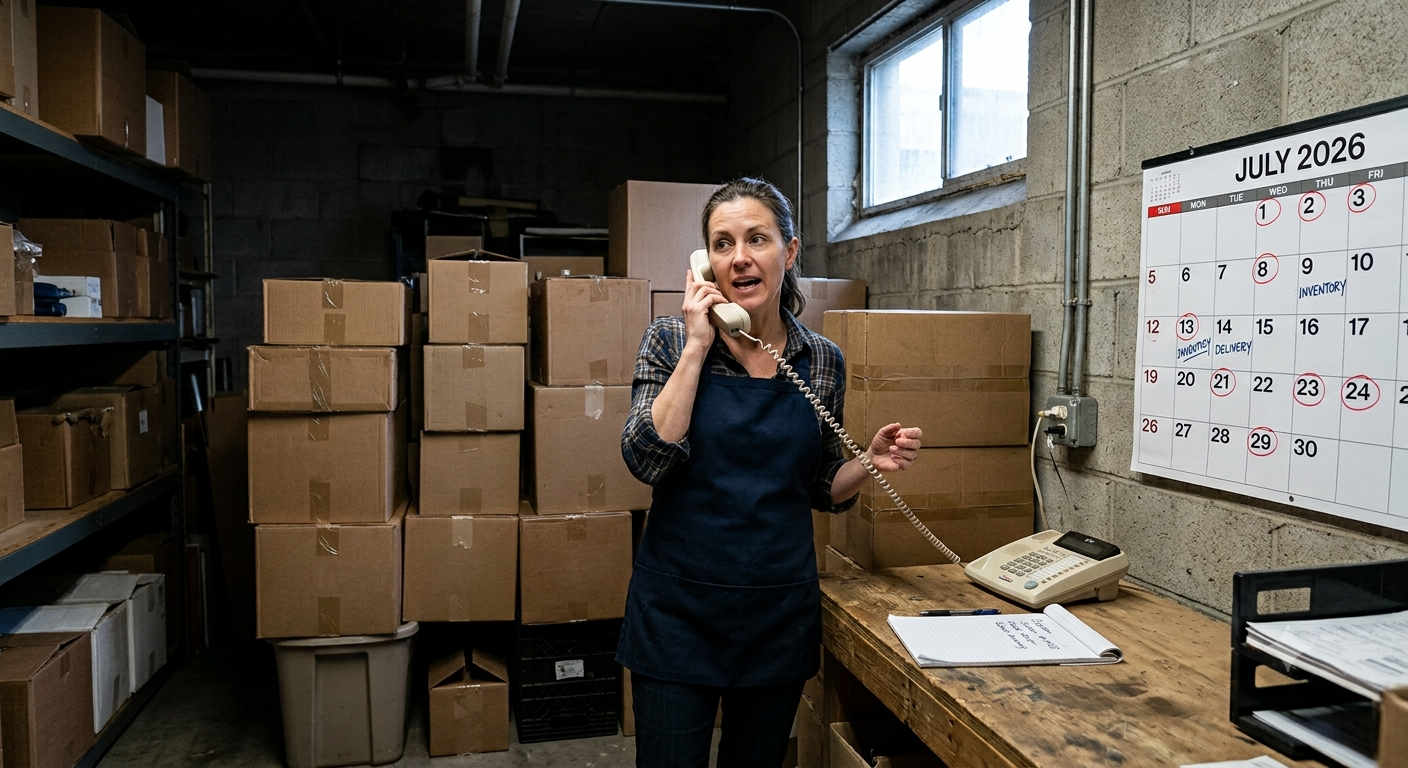

Something breaks. A supplier demands early payment. A slow quarter hits harder than expected. Suddenly you need capital, and you need it in days, not weeks. This is the moment most small business owners discover how few real options they thought they had versus how many actually exist.
The bank is usually the first call. It's often the wrong one, at least when speed matters. Traditional lenders move slowly by design. The paperwork is extensive, the underwriting takes time, and approval is far from guaranteed. According to ISED Canada's Small Business Credit Condition Trends report, 66% of small businesses that sought debt financing in 2024 were required to pledge collateral, up sharply from 46% the year before. If you're running lean, that requirement alone can close the door.
So what are the actual options? Here's a clear-eyed look at what's available, what each one is suited for, and what you should know before you commit.
Term Loans and Lines of Credit
These are the products most people picture when they think of small business loans, and they still make sense in the right context. A term loan gives you a lump sum repaid over a fixed period. A line of credit gives you a revolving facility you draw on as needed. Both are offered through banks, credit unions, and some alternative lenders.
The tradeoff is time. If your relationship with your bank is strong and your finances are clean, this route can work. But if you're newer, have uneven revenue, or need money in the next week or two, this is almost certainly not going to move fast enough. Approval timelines at major Canadian banks typically run weeks, sometimes longer if additional documentation is requested.
For businesses that qualify, though, these products carry the lowest cost of capital. Worth pursuing if you have the runway to wait.
Merchant Cash Advances
A merchant cash advance works differently from a loan. A lender advances you a lump sum, and repayment comes as a fixed percentage of your daily or weekly sales. There's no fixed monthly payment you have to hit regardless of how business is going. When sales are strong, you pay back faster. When things slow down, so do the repayments.
This makes it particularly well-suited for businesses with consistent transaction volume: retail stores, restaurants, service businesses, anyone running cards through a POS system regularly. Approval is based primarily on revenue history rather than credit score, and funding can happen in as little as 24 to 48 hours. That's the reason so many business owners reach for this when they need fast business funding and traditional lenders aren't moving quickly enough.
The cost is higher than a conventional loan. That's the honest trade-off for speed and flexibility. Used strategically, for a short-term gap or a time-sensitive opportunity, the math can work clearly in your favour.
Industry-Specific Financing
Some industries carry a structural cash flow problem that has nothing to do with how well the business is run. In construction projects, you're often financing a job before the client pays for it. Deposits don't always cover materials, draws come late, and payroll doesn't pause while you wait on an invoice. In trucking companies, costs hit before revenue almost every time. Fuel, maintenance, insurance: it's all out the door before a load settles.
The point isn't that these businesses are harder to finance. It's that their cash flow pattern is different, and a lender who understands that will structure things accordingly. If you've been turned down before, it may be less about your business and more about who you were talking to.
Government Programs
The Canada Small Business Financing Program (CSBFP) is worth knowing about, even if it doesn't solve an urgent funding need. The federal government partners with private lenders to back loans for eligible small businesses, which reduces the lender's risk and can make approval more accessible for businesses that sit slightly outside traditional lending comfort zones.
The CSBFP is designed primarily for asset-backed purposes: equipment, leasehold improvements, real property. It's not a fast product, and it's not intended for working capital gaps. But if you're planning ahead and need financing for a specific business asset, it's a legitimate and lower-cost option to explore.
Statistics Canada's Canadian Survey on Business Conditions found that roughly 12% of Canadian businesses reported not having the cash or liquid assets required to operate over the next three months. That's a meaningful number of businesses in a genuinely tight position, and government programs alone aren't going to move fast enough for most of them.
What to Do When Your Credit Isn't Perfect
A lot of business owners assume that a bruised credit profile rules them out entirely. It doesn't. The alternative lending space evaluates businesses on a wider set of criteria: revenue consistency, time in business, industry, and transaction volume all factor in alongside credit history.
Credit problems are more common than most people admit. An unexpected personal event, a difficult quarter, a deferred tax payment that got away from you: these things happen. They don't have to permanently close the door on financing. More options exist than most people realize, and knowing what they are before you're in a crisis is half the battle.
Matching the Tool to the Problem
The most common mistake in business financing isn't choosing the wrong product. It's not knowing the options well enough to choose at all. Most business owners have a vague awareness that bank loans exist and a vague sense that everything else is expensive. The reality is more nuanced.
Speed, flexibility, cost, and eligibility all sit on a spectrum. A merchant cash advance costs more than a term loan but closes in 48 hours. Industry-specific products are better structured for your actual cash flow cycle than a generic line of credit. Bad credit doesn't mean no options; it means different ones.
If you're trying to sort out what makes sense for your business, 2M7.ca is happy to walk you through it.


