Yes, Canadian businesses can finance equipment with bad credit. The main routes are vendor financing, equipment leasing, specialist equipment lenders, BDC, the Canada Small Business Financing Program and revenue-based funding such as a merchant cash advance. The right fit depends on your credit history, monthly revenue, time in business, the equipment itself and how quickly you need the funds.
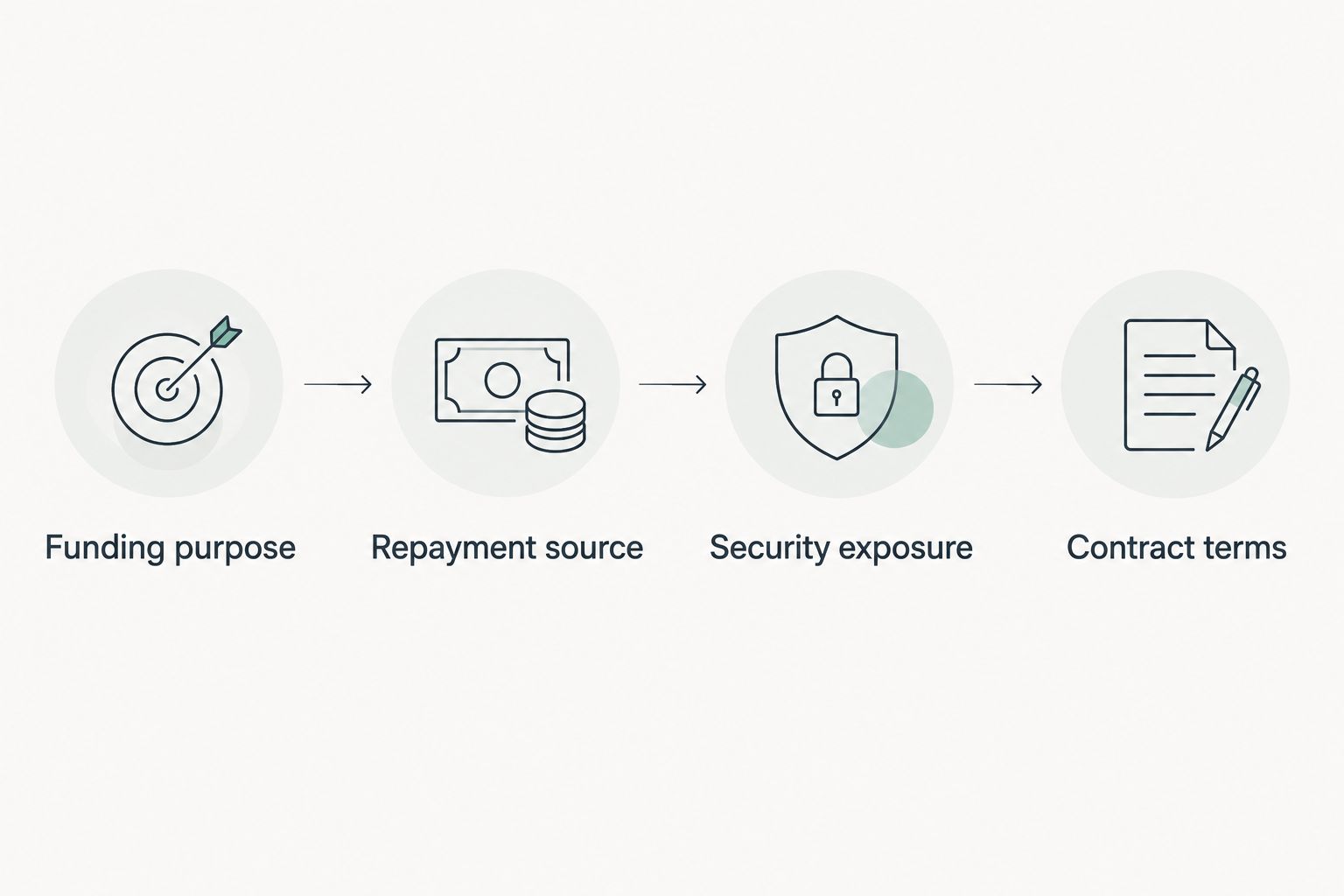
The goal should not simply be to find a provider willing to approve you. It should be to understand why each provider is willing to finance the purchase, what it requires as security, how the financing is structured and what you will pay in total. That matters because equipment financing can work very differently depending on whether the provider is underwriting the asset, the business or both.
How bad credit affects equipment financing
Bad credit can reduce your equipment financing options, but it does not necessarily prevent a Canadian business from getting financed.
Conventional equipment providers typically look at more than your credit score. Depending on the financing structure, they may also consider how long you have been in business, revenue and cash flow, existing debt, the available down payment, the type and age of the equipment, its useful life and resale value, and any collateral or guarantees available.
BDC explains that equipment is usually used as collateral for an equipment loan and that the repayment period is generally aligned with the lifespan of the asset. For larger purchases, a down payment may also be required. BDC, Equipment Financing 101
That is one reason the equipment itself matters. A relatively new truck, trailer or widely used piece of construction equipment may have a more predictable resale market than highly customized or older machinery. Credit history still matters, but it is only one part of the underwriting equation. The weight placed on it depends heavily on the provider and financing product.
Your equipment financing options compared
Canadian businesses with imperfect credit have several potential routes. They should not be treated as interchangeable.
| Option |
How it works |
What providers weigh most |
Equipment pledged? |
Timing |
Cost structure |
Best fit |
| Vendor financing |
Dealer or manufacturer arranges financing for the purchase |
Credit, equipment and program requirements |
Usually tied to the equipment |
Varies |
Interest or financing charges |
New equipment from a vendor with a financing program |
| Equipment lease |
Business pays to use equipment for a set term |
Credit, time in business, asset value and lease structure |
Lessor generally owns the equipment during the lease |
Varies |
Lease payments plus applicable fees or end-of-term costs |
Equipment that may need regular replacement |
| Specialist equipment financing |
Term financing for a specific asset |
Credit, down payment, business performance and resale value |
Usually |
Varies |
Interest and applicable fees |
Financeable assets with an established resale market |
| BDC equipment loan |
Business financing specifically for equipment purchases |
Business financials, credit history, cash flow and the purchase |
Typically secured |
Varies |
Interest-bearing term financing |
Established businesses making planned investments |
| Canada Small Business Financing Program |
Participating lender provides financing under a federal risk-sharing program |
Lender credit criteria plus CSBFP requirements |
Security requirements apply |
Varies by lender |
Interest and applicable program/lender fees |
Eligible Canadian businesses purchasing qualifying equipment |
| Merchant cash advance |
Business receives capital based largely on business revenue |
Revenue, recent performance, time in business and credit |
2M7 states no collateral required |
2M7: decision typically within one business day; funds generally within 24 hours of approval |
Fixed cost of capital rather than interest |
Steady-revenue businesses where credit, timing, repairs or used equipment make asset financing less practical |
The central distinction is what is being financed. Equipment loans and leases are tied directly to the asset. A merchant cash advance provides business capital that can then be used to buy, upgrade or repair equipment.
Vendor financing
Vendor financing allows the business selling the equipment to arrange the financing at the point of purchase.
BDC notes that many manufacturers operate their own financing divisions, while other equipment sellers have relationships with external financial institutions that can provide either a loan or lease. The obvious advantage is convenience: the equipment purchase and financing can often be arranged together. BDC, Equipment Financing 101
Vendor financing is most relevant when you are buying new equipment from a manufacturer or dealer with an established financing program and can meet that program's credit requirements. It is still financing, however, so poor credit can affect eligibility or pricing. It is worth comparing the vendor's offer with outside financing rather than assuming the most convenient option is automatically the least expensive.
Equipment leasing
Equipment leasing lets a business use equipment for a defined period instead of purchasing it outright at the start.
Under a typical lease, the business makes regular payments for the right to use the equipment. Depending on the agreement, it may be possible to return the equipment, renew the lease or purchase it at the end of the term. Leasing can be especially useful for equipment that becomes outdated quickly or that a business expects to replace regularly.
The main comparison point is total cost. Lower monthly payments do not necessarily mean the lease is less expensive overall, particularly if the business ultimately wants to own the equipment. The useful comparison is between total lease payments, upfront costs, fees, any end-of-term purchase price and the cost of financing the purchase instead.
Specialist equipment financing
Specialist equipment lenders focus on financing business assets and usually evaluate both the business and the equipment itself.
These providers may assess the purchase price, equipment type, age, condition, expected useful life and resale value alongside the business's cash flow, credit history and available down payment. A business with imperfect credit may have more room to work with when the asset has a strong resale market. The reverse can also be true: older, heavily customized or highly specialized equipment may be harder to finance because its value is more difficult for the lender to recover if the financing defaults.
BDC equipment financing
BDC offers equipment financing specifically designed for longer-term business assets.
BDC currently states that its equipment financing can cover up to 125% of the equipment purchase price, helping eligible borrowers finance related costs such as shipping, installation and training. Repayment can extend for up to 12 years, depending on the financing assessment.
BDC also lists general requirements for its equipment loan, including being based in Canada, generating revenue for at least 12 months and having a good credit track record. That makes it particularly relevant for established businesses making planned investments in equipment with a long useful life. BDC's own guidance recommends matching longer-life equipment with term financing rather than using short-term working capital for significant purchases.
Canada Small Business Financing Program
The Canada Small Business Financing Program, or CSBFP, gives eligible Canadian businesses another route to financing equipment through participating financial institutions.
The federal government does not lend the money directly. Private-sector lenders make the credit decision, approve and disburse the financing, and administer the loan. Innovation, Science and Economic Development Canada administers the program and shares part of the eligible loss with lenders when program requirements are met.
Eligible Canadian businesses with gross annual revenues of up to $10 million can use the program for equipment and other qualifying purposes. The program permits up to $1.15 million in total financing, including up to $1 million in term loans and $150,000 in lines of credit. In 2024-25, equipment loans represented $350.9 million, or 18.6% of CSBFP financing. ISED, Canada Small Business Financing Program Overview and Highlights 2024-25
Government involvement does not mean approval is guaranteed. The participating bank, credit union or caisse populaire still applies its lending criteria and makes the credit decision.
When a merchant cash advance makes sense for equipment, and when it doesn't
A merchant cash advance can make sense when the business has reliable revenue but conventional equipment financing is unavailable, too slow or poorly suited to the expense.
A merchant cash advance is not an equipment loan. It is an advance based on future business revenue. At 2M7 Financial Solutions, the funding can be used to buy, upgrade or repair equipment. 2M7 states that no collateral is required and that it evaluates the business based on revenue and performance. 2M7 merchant cash advance
That creates a different underwriting model. An equipment lender is primarily evaluating the business's ability to repay and the financeability of the asset. A revenue-based funder can place considerably more weight on how the business itself is performing.
This distinction can matter when revenue is steady but credit is weak, when equipment needs to be replaced quickly, when the expense is a repair rather than a new asset, or when used equipment does not fit an asset lender's criteria. Timing can matter as well. If waiting for a longer conventional approval process would keep a revenue-producing asset out of service, the speed of the financing becomes part of the economic comparison.
A merchant cash advance and conventional equipment financing are priced differently, so businesses should compare the total cost together with factors such as speed, flexibility, collateral requirements and qualification criteria.
Secured equipment financing can usually be priced more favourably because the financing provider has an asset securing the transaction and can spread repayment over a longer period. With a merchant cash advance, the business is paying for a different combination of benefits, including speed, revenue-based underwriting and greater flexibility around credit and collateral.
If you qualify for affordable long-term equipment financing and have enough time to complete the process, that will often be the more economical choice for a large, long-life asset. For a repair, smaller purchase or time-sensitive need, the calculation may be different.
Equipment funding examples by industry
Restaurants
Restaurant equipment can become a financing issue very quickly because a failed asset can directly affect the restaurant's ability to operate. A walk-in refrigerator, oven, dishwasher or POS system does not always fail on a convenient schedule.
One 2M7 restaurant customer reported using funding to purchase new kitchen equipment and continuing to upgrade the facility afterward. For a planned renovation or major equipment purchase, owners should still compare vendor financing, leasing, traditional equipment financing and the CSBFP before choosing a revenue-based option. For restaurants where a revenue-based option makes sense, see how 2M7 funds restaurant equipment and operations.
Restaurants are also significant users of the CSBFP. According to ISED, accommodation and food services accounted for $900.9 million, or 47.8% of total CSBFP financing in 2024-25. ISED, CSBFP Overview and Highlights 2024-25
Construction
Construction equipment purchases should be evaluated against both the useful life of the equipment and the cash-flow timing of the projects it will support. A contractor purchasing a major excavator that will be used for years may be better served by long-term asset-backed financing. A different issue arises when a contractor has signed work but needs a smaller piece of equipment, an attachment or a repair before mobilization. In that situation, the cost of financing needs to be compared with the business impact of waiting.
2M7 construction funding
Trucking
Trucking businesses should distinguish between financing a vehicle purchase and funding a repair that gets an existing revenue-producing truck back on the road. A new truck or trailer is a long-life asset and may fit naturally into conventional equipment financing. A major engine, transmission or other repair does not create the same new asset. In that situation, access to working capital can become more relevant than asset financing, and the comparison should include the effect of having the truck unavailable.
2M7 trucking business funding
Landscaping and seasonal businesses
Seasonal businesses may need to purchase equipment before the revenue generated by that equipment arrives. For a landscaping company buying mowers, trailers or other equipment ahead of its peak season, financing should therefore be evaluated partly on how repayment fits the business's seasonal cash flow.
How to prepare before applying
Preparing the right financial and equipment information before you apply makes it easier to compare realistic financing options.
BDC notes that equipment lenders commonly ask for the equipment quote as well as company information, financial statements and projections. For most comparisons, it helps to have the equipment quote or purchase agreement, details on the make, model, age and condition if it is used, recent business bank statements, revenue history, existing financing obligations, the available down payment and, for larger requests, financial statements or projections.
Revenue-based providers may require a different set of documents. 2M7 currently asks applicants to have their last three months of bank statements, photo identification and a void cheque available. Check 2M7 qualification details
The most important comparison is not simply the weekly or monthly payment. Look at the amount received, total amount repaid, financing term, interest rate or fixed cost, fees, collateral requirements, any personal guarantee, early-repayment provisions, whether payments are fixed or variable, and who owns or controls the equipment during the financing period. For a broader checklist, see questions to ask a business funder.
How 2M7 funding works for equipment
2M7 Financial Solutions is a Canadian direct funder that provides merchant cash advances businesses can use to buy, upgrade or repair equipment. 2M7 is not an equipment lender and does not structure its product as a loan.
To meet 2M7's current minimum qualification criteria, the business must be located in Canada, have operated for at least three months, generate at least $15,000 per month in revenue and have no open bankruptcies. Credit is considered, but 2M7 states that it looks at the broader picture, including monthly business revenue, rather than relying exclusively on credit history. Business funding with bad credit
- Apply and speak with a 2M7 representative. Most approved applications receive a decision within one business day.
- Review the cost before signing. 2M7 uses a fixed cost of capital rather than charging interest, and discloses that cost before the agreement is signed.
- Receive the funds. For approved applications, funds typically reach the business within 24 hours of approval.
- Choose the applicable payment structure. 2M7 offers fixed payments and a Flex option that adjusts with sales for businesses processing daily debit and credit transactions.
For more detail on how the product works, see 2M7's merchant cash advance guide.
Frequently asked questions
Can I get equipment financing with bad credit in Canada?
Yes. Canadian businesses with bad credit may still have several equipment financing options, including vendor financing, leasing, specialist equipment financing, government-backed financing and revenue-based funding. The options available will depend on your credit profile, business revenue, operating history and the equipment being purchased.
How does equipment financing work?
Traditional equipment financing provides funds to purchase an asset and usually uses that equipment as security for the financing. BDC notes that repayment periods are generally matched to the useful life of the equipment.
How do I get equipment financing?
Start by getting an equipment quote and gathering your business and financial information. Then compare providers based on eligibility, total cost, repayment structure, collateral and the amount of the purchase each provider will finance.
What is equipment lease financing?
Equipment leasing allows your business to use equipment for a set period without purchasing it outright at the beginning. Depending on the lease, you may be able to return the equipment, renew the agreement or buy the equipment at the end.
How long can equipment be financed?
Equipment financing terms generally depend on the useful life of the asset and the provider's underwriting criteria. BDC currently offers equipment-loan repayment periods of up to 12 years for qualifying borrowers.
Can I finance used equipment?
Yes. Used equipment can be financeable, although the age, condition and resale value of the equipment can affect eligibility. If conventional asset financing is not suitable, revenue-based funding may provide another way to fund the purchase because it does not rely on the equipment itself as the basis of the advance.
Can a startup get equipment financing?
It depends on the provider and how long the business has been generating revenue. BDC currently lists at least 12 months of revenue generation among the general requirements for its equipment loan. 2M7 requires at least three months in business and at least $15,000 in monthly revenue.
Is a merchant cash advance a loan?
No. A merchant cash advance is an advance against future business revenue rather than a conventional loan. 2M7 charges a fixed cost of capital disclosed before signing rather than interest.
Does a merchant cash advance cost more than equipment financing?
Usually, yes. A merchant cash advance will generally cost more than secured equipment financing. The tradeoff is that revenue-based funding can offer faster access to capital, different credit criteria and, in 2M7's case, no collateral requirement.
Does bad credit automatically disqualify me from 2M7 funding?
No. Bad credit does not automatically disqualify a business from 2M7 funding. 2M7 says it considers credit but also evaluates monthly revenue and the broader performance of the business.
Choosing the right equipment financing option
The right financing structure should match the equipment, the economics of the purchase and the financial position of the business.
For expensive equipment with a long useful life, start by comparing conventional equipment financing, leasing, BDC and CSBFP-backed financing. For used equipment, repairs or time-sensitive purchases where conventional asset financing is unavailable or impractical, revenue-based funding may be worth including in the comparison.
The key is to compare total cost, repayment structure, collateral and timing, not simply whether the business can get approved.
If revenue-based funding is one of the options you are considering, a 2M7 funding specialist can explain the cost and payment structure for your specific equipment purchase before you decide.
Check if I qualify